90 day multiple entry Vietnam eVisa: validity and access
Written by Andrew Duong, visa consultant at Joey Visa Vietnam · Last updated:
Learn how the 90 day multiple entry vietnam evisa validity works, what re-entry means, who can apply, and how to check approved Vietnam entry ports for clear...
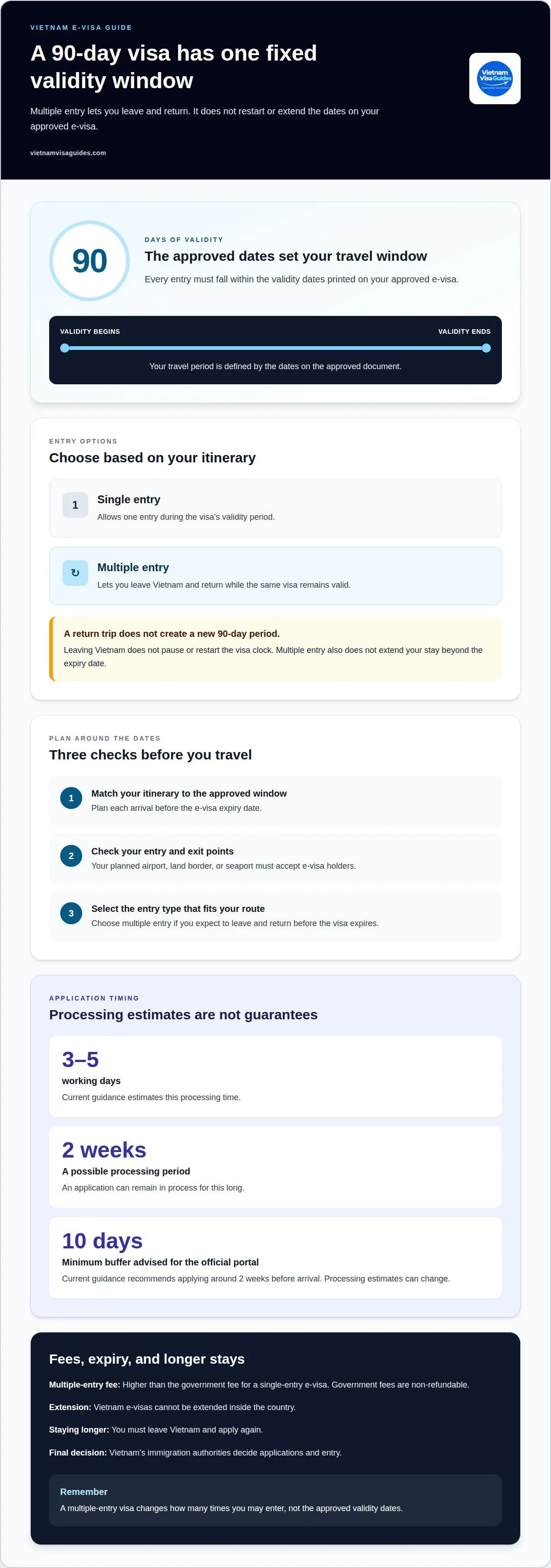
Your 90-day visa clock does not restart when you re-enter Vietnam. According to the Vietnam Immigration Department, a 90-day multiple-entry Vietnam e-visa allows multiple entries during its validity period, but returning does not create a new 90-day window. The dates on your approved e-visa define your travel period.
That distinction matters if your itinerary includes travel outside Vietnam or arrivals through different airports, land borders, or seaports. A multiple-entry eVisa lets you return during its approved validity period, but your chosen entry point must also accept eVisa holders. Understanding both requirements helps you plan your route.
This guide explains what the e-visa allows, who can apply, how long multiple-entry validity lasts, and which approved ports accept it. You’ll learn how the 90-day period works and what to consider when planning entry and exit points, without mistaking a return trip for an extension of your visa.
Key Takeaways
- Prepare a clear passport scan and portrait photo before applying, and make sure your details are easy to read.
- Travelers from all countries and territories can apply, but each person needs a separate application.
- Match your trip dates to the approved visa window. Leaving and returning does not extend that window.
- Check that your planned entry and exit points accept e-visa holders, and allow time for processing before departure.
What is Vietnam’s e-visa?
A Vietnam eVisa is an electronic visa issued by Vietnam’s immigration authorities. You apply online for permission to enter Vietnam for tourism or other permitted purposes. The application relies on your passport details and supporting files, so accuracy matters from the start.
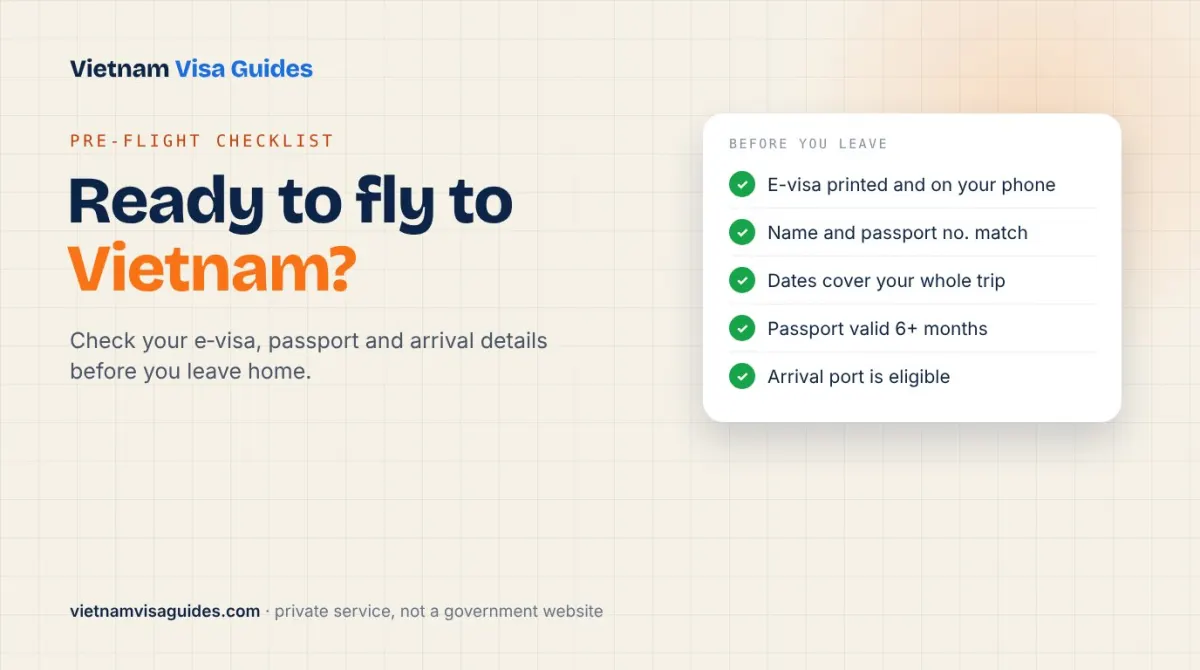
Prepare a clear passport scan and a portrait photo measuring 4×6 cm. The guide also advises that your passport should remain valid for at least 6 months after arrival. Each application covers one foreigner, so every traveler needs a separate application.
Use this basic sequence for an application:
- Enter the traveler’s details as shown in the passport.
- Upload the passport scan and portrait photo, then review each field and file.
- Submit the application and keep its reference details for status checks.
A blurred scan, unclear photo, or mismatch between your passport and application can cause problems. Before submitting, check the spelling and passport details, and make sure your uploaded image clearly shows the required information. A careful review helps avoid preventable errors, but immigration authorities make the final decision.
If you spot a mistake after submitting your application, follow the correction instructions available through the application system. Don’t assume you can edit a submitted application or that a new submission will automatically replace it. Check your status using the official status function and the identifying details it requests, then follow any instructions shown before taking further action.
Keep the approved e-visa accessible with the passport used to apply. If a close departure date leaves little time to resolve an application issue, review same-day Vietnam visa timing as you consider your next step.
Countries and territories eligible to apply
Citizens of all countries and territories can apply for a Vietnam e-visa. Eligibility has applied worldwide since 15th August 2023. Vietnam’s electronic visa issuance was expanded to citizens of 257 countries and territories. These figures describe nationality eligibility, not automatic permission to enter Vietnam.
Your nationality should match the citizenship shown in the passport used for your application. For example, if your passport identifies you as a citizen of a particular country, select that nationality. Use the same passport for your visa application and your arrival so immigration officers can match the eVisa to your travel document.
Nationality is only one part of the application. You must also provide the requested personal and travel details, choose the right visa type, and receive an approved eVisa before travelling. Each traveler needs an individual application and visa decision, even when traveling with family or a group.
Eligibility to apply does not mean every applicant will be issued a visa or allowed to enter Vietnam. Article 21 of Vietnam’s Law on entry, exit, transit and residence of foreigners covers people prohibited from entering Vietnam. A 90-day travel plan does not change that distinction: the approved e-visa and your circumstances at arrival both matter.
Before submitting, compare the nationality and passport details in your application with the document you will carry across the border. If your citizenship, passport, or travel details differ between records, correct the application before relying on it for entry. Keep your approved eVisa available for airline and immigration checks.
If your arrival is approaching and you need help with an urgent application, explore urgent Vietnam visa assistance.
How Long Is a 90-Day Multiple-Entry Vietnam eVisa Valid?
Vietnam’s e-visa is valid for 90 days and allows multiple entry, according to the Vietnam Immigration Department. The approved e-visa shows the travel period, and every entry must fall within those dates.
A single-entry visa allows one entry during its validity. A multiple-entry visa lets you leave Vietnam and return while the same visa remains valid. For example, you can travel to another destination and re-enter Vietnam, but leaving does not pause or restart the visa’s validity period.
Re-entering Vietnam does not grant another 90 days. If your approved visa ends during your trip, multiple-entry permission does not extend your stay beyond its expiry date. Plan tourism and other travel around the dates printed on the approved document.
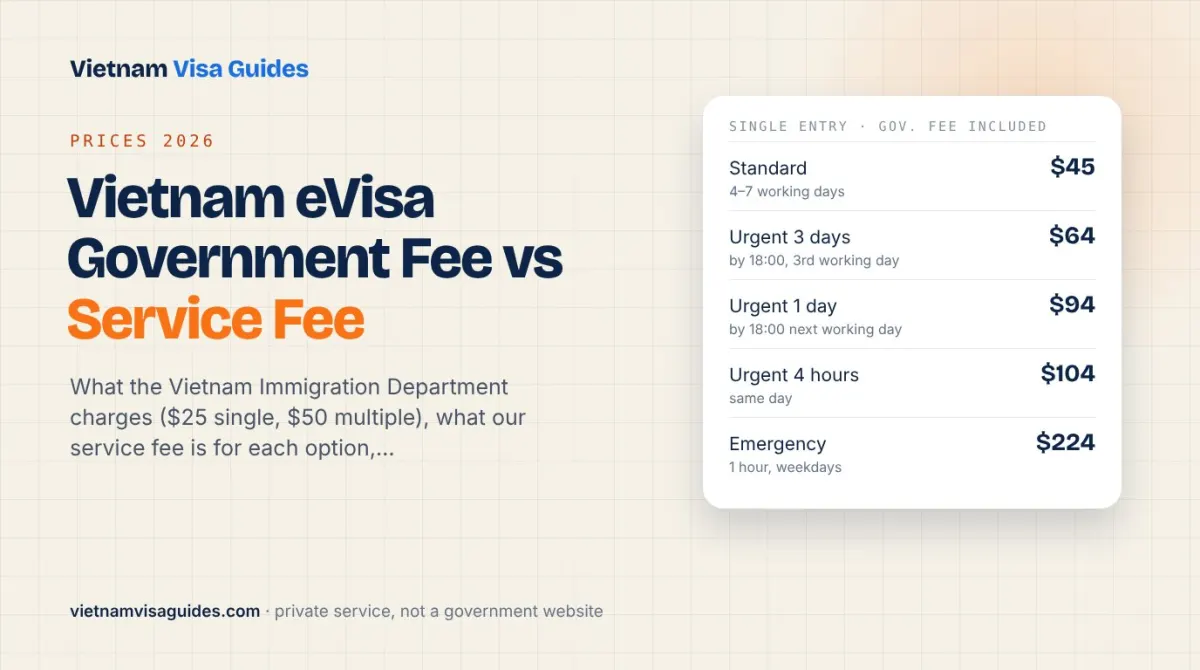
The government fee depends on the visa type. The fee for a multiple-entry eVisa is higher than for a single-entry eVisa, so choose according to your itinerary. This is the government application fee, separate from any assistance or expedited-processing service fee. Government fees are non-refundable, so select the correct visa type before submitting.
Can a Vietnam eVisa be extended or renewed while in Vietnam? Vietnam eVisas cannot be extended inside the country. To stay longer, do a visa run: leave Vietnam, apply for a new urgent e-visa, and come back the same day.
Before applying, count how many times you plan to enter Vietnam during the visa’s validity period. Choose single entry if your itinerary includes one arrival and no return. Choose multiple entry if you expect to leave and come back before the visa expires. Neither option changes the approved validity period.

How long does Vietnam e-visa processing take, and when should you apply?
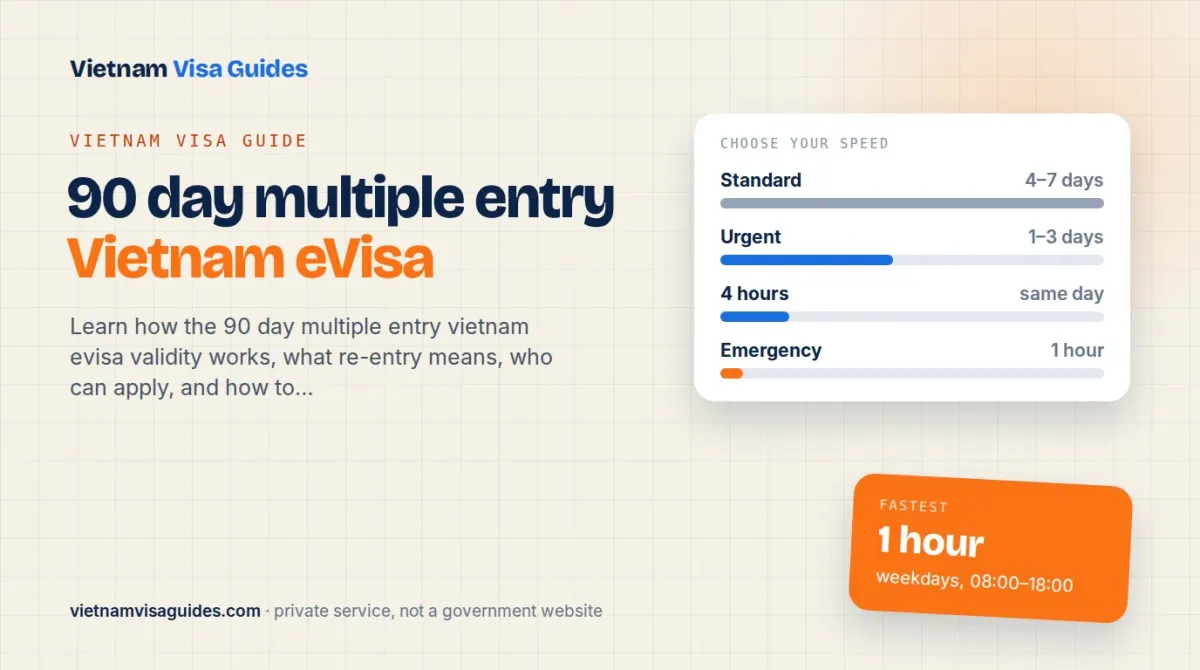
Standard processing for a Vietnam e-visa takes 4–7 working days, and longer around public holidays. Apply 1–2 weeks before your planned arrival so you have a buffer.
Processing times are estimates, not a fixed schedule. Vietnam’s immigration authorities decide applications, and processing can vary depending on the application and review. Your flight date does not change the processing schedule, so avoid planning your arrival around the shortest estimate.
Allow room for practical delays. An unclear passport scan, a photo that does not meet the application requirements, or incorrect personal details can lead to issues that need attention. Review every field and uploaded file before submitting, then keep your application reference for status checks.
Use this timing plan, and check the latest guidance before applying:
- We recommend submitting the application 1–2 weeks before your intended entry date.
- Allow 4–7 working days for standard processing, plus a buffer for weekends and holidays.
- Check the application status using its reference details, especially as your departure approaches.
- Do not treat the 4–7 working-day estimate as a guaranteed result or permission to board.
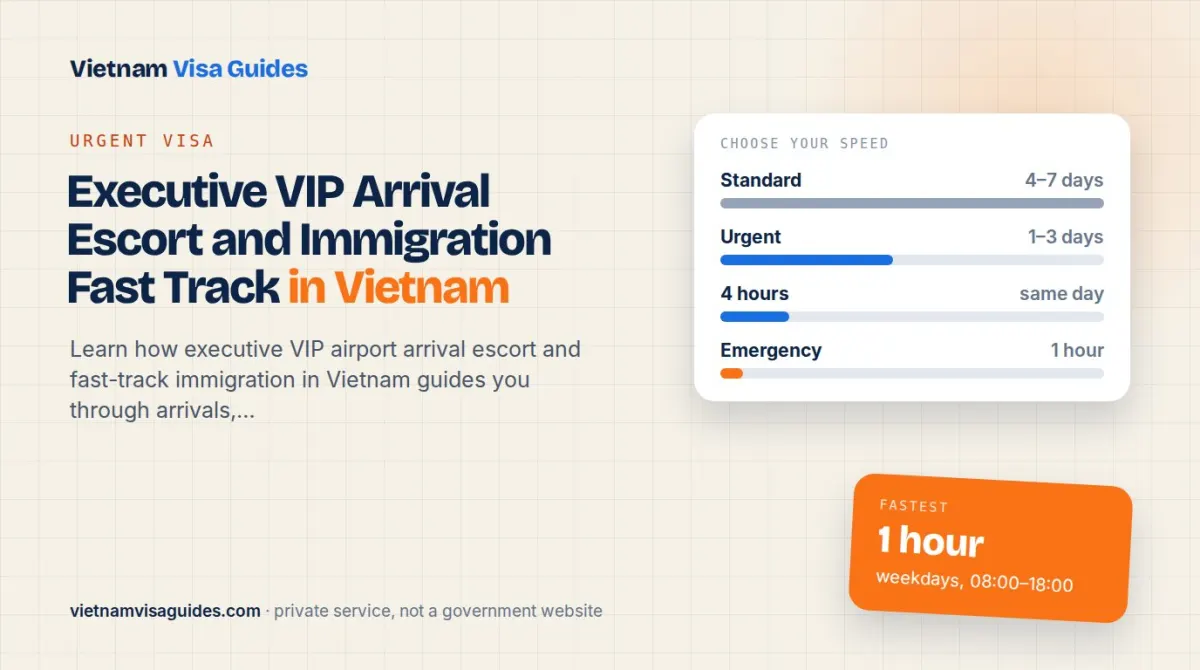
If your application is still processing close to departure, check its status and confirm that your submitted details are accurate. Standard processing usually takes 4–7 working days; if you are short of time, urgent options start from 1 hour on weekdays. A pending result does not by itself mean your application has been rejected. Keep your travel plans flexible until your eVisa is issued.
Urgent eVisa assistance is a separate service from the official government portal. Vietnamese immigration authorities retain the final approval decision.
Vietnam Visa Guides | Urgent Vietnam eVisa Assistance
Vietnam Visa Guides | Urgent Vietnam eVisa Assistance helps travelers with Vietnam eVisa applications and urgent travel plans. The service is separate from the government application portal, and Vietnamese immigration authorities decide whether to approve each visa.
If your departure is close, urgent options deliver in 1 to 3 working days or within 4 hours, Emergency 1 hour works on weekdays, and a weekend option delivers by 18:00 on Saturday or Sunday (cut-off 15:30 each day, Vietnam time) for applications from 18:00 on Friday. The right next step depends on your travel date and application situation.
For a trip involving multiple entries, plan around the approved visa dates; your eVisa is valid at any of the 83 eVisa border gates. Fasttrack Airport can help with arrival procedures, but it does not replace an approved visa or change its validity.
For help with a Vietnam eVisa or urgent travel plans, contact Vietnam Visa Guides | Urgent Vietnam eVisa Assistance.
Make your travel plan work around your visa
Turn your visa decision into a practical travel plan. Keep your itinerary, travel documents, and booking details together so you can refer to them easily. If your plans change, consider how the change affects your route before making new bookings.
A 90-day multiple-entry Vietnam e-visa works best when it fits your travel plans. Before committing to separate trips, consider where you intend to travel between visits and how you will return. Keep transport and accommodation arrangements aligned with your itinerary.
If an application issue or a close departure date disrupts your plans, focus first on the decision that affects your next step. Organize your travel details so you can explain the situation clearly when seeking assistance.
Take your plans one decision at a time. With your documents and itinerary organized, you can move forward with greater confidence.
Frequently Asked Questions
Can incorrect information on an e-visa application be corrected?
What to do depends on whether you have submitted the application or received your eVisa. Before submission, correct the field directly. After submission, use your application reference to check the status and follow the instructions provided. If an issued eVisa contains an error, don’t assume it can be edited. Its details must match your passport before you travel.
What is a Vietnam eVisa, and does it allow multiple entries for 90 days?
A Vietnam eVisa is an electronic travel permit issued by the Vietnam Immigration Department. Vietnam offers a multiple-entry option valid for 90 days. The approved document sets the travel dates, and returning to Vietnam does not restart the validity period. Keep the e-visa accessible with the passport used for the application, so the details can be matched during travel checks.
Who can apply for a Vietnam e-visa?
Travelers from countries and territories worldwide can apply for a Vietnam eVisa. Each traveler needs an individual application using the passport they will carry. Eligibility to apply does not guarantee approval or permission to enter. Your chosen entry point must accept eVisa holders, and immigration authorities make the final visa decision.
How much does a multiple-entry Vietnam e-visa cost?
The government fee for a multiple-entry eVisa differs from the fee for single entry. The applicable amount is shown during the official application and payment process. Government fees are non-refundable. If you use private application assistance, its service fee is separate. Review the total cost and included services before paying, especially when comparing assisted processing with applying directly.
How do you apply online for a Vietnam e-visa?
Apply through Vietnam’s official eVisa portal and select the entry type that matches your travel plans. Enter your passport and trip details, upload the requested documents, and review the form before submitting. Save your application reference to check your status. Submit a separate application for each traveler, and wait for your approved eVisa before relying on it for travel.
Which airports, land borders, and seaports accept Vietnam e-visas?
Vietnam e-visa holders may enter and exit through any of the 83 approved eVisa border gates: 17 airports, 27 land border gates and 39 seaports. This applies to every entry on a multiple-entry eVisa.

Article by
Andrew - Vietnam Visa Guides
I'm Andrew (Hoàng Tùng Dương, "Duong" to many of my clients), a visa consultant at Joey Visa Vietnam since 2017.
I help travellers from all over the world get their Vietnam e-visa quickly and without mistakes, including urgent visas in as little as 1 hour and on weekends.
Together with the Joey Visa team, we've helped more than 155,000 travellers since 2017.
Explore Topics

Written by
Andrew Duong
Vietnam visa consultant at Joey Visa Vietnam since 2017. I check every application by hand, including urgent and weekend e-visa cases.