Vietnam eVisa Review: How Long to Wait and What to Do Next
Written by Andrew Duong, visa consultant at Joey Visa Vietnam · Last updated:
Facing Vietnam eVisa review bottlenecks? Check your status, fix application issues, and choose next steps if your travel date is near. Get clear advice.
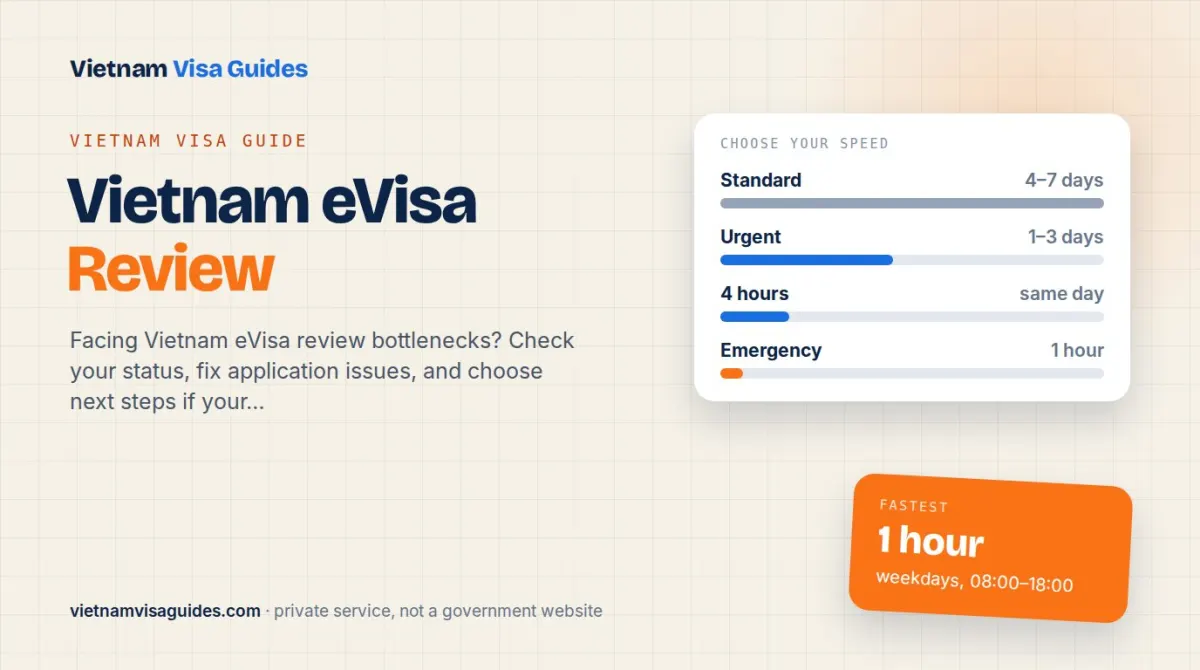
Standard Vietnam e-visa processing takes 4–7 working days after payment. Vietnam e-visa review bottlenecks can arise from application errors, upload problems, or website difficulties. If your flight is close, the right next step depends on your application’s status and the problem involved.
This guide explains how to check your Vietnam eVisa application, respond to a correction request, and understand common reasons for rejection. You’ll also learn what to do if payment fails or your status does not change. Each issue calls for a different response, so check what the portal shows before acting.
Once you understand the problem, you can decide whether to wait, correct an error, or seek urgent assistance. The steps below focus on your application and travel plans, without treating a pending result as an approval.
Key Takeaways
- Check your application status using the registration code, registered email, and date of birth, then respond promptly if action is requested.
- Understand why an amendment request can stall your application and what to consider before submitting information again.
- Review your passport details and uploaded images to spot common errors that may lead to rejection.
- If processing runs past the normal window or your travel date is close, learn which next steps may help you move forward.
1. Vietnam eVisa Problems : Rejected, Payment Failed or No Response?
Processing times can change, so do not rely on 3 working days as a fixed timeline. Check the latest information on the official government portal. If you’re waiting, use the application’s registration code, registered email, and date of birth to check its status. Look for a correction request or updated decision before submitting another visa application. Keep the code and payment receipt together, so you can identify the application and understand what happened if payment appears incomplete.
If the portal requests a correction, read the requested change carefully before responding. Whether you can edit incorrect application details depends on the portal’s current instructions. Check your full name and name order, passport number, date of birth, and nationality against your passport before submitting again. A mismatch in even one field can create a problem when you enter Vietnam. For examples of common errors, see these Vietnam e-visa rejection reasons.
A technical issue can interrupt an application or prevent it from being submitted. A weak internet connection may also disrupt form completion or payment. If a page freezes, don’t submit the same application repeatedly. First check whether the portal recorded your submission or payment, then try again when your connection is stable. If an instruction is unclear, pause and translate the specific field before entering details. Language barriers can lead to errors in names, dates, and passport information.
Processing times can vary, so check the latest official information rather than assuming the e-visa takes 3 working days after payment. Visa-on-arrival and embassy options follow different application steps, so compare the route available to you and your travel deadline rather than assuming they take the same time. Eligibility and entry arrangements can depend on your circumstances.
Check the latest official government portal for applicable e-visa fees and payment terms. Use the payment options shown on the portal, and keep the receipt. If payment fails or the status is unclear, confirm whether the transaction went through before trying again. Review the current terms before paying, including any information about refunds.
2. Amendment-required loops
An amendment request can leave you unsure whether to edit the existing application or start again. Read the notice closely and identify the exact field or document it mentions. A request about an uploaded image differs from an incorrect passport number or travel detail. Keep the registration code and notice together so you can refer to the right application while deciding what action to take.
The application page states that incorrect information cannot be edited or changed, so you must submit a new application. Check everything carefully before completing another form. If a date or passport detail is wrong, don’t assume repeated amendment attempts can repair the existing record. Follow the stated instructions and make sure the replacement application contains the correct information.
Uploads can also trigger a correction loop. The application interface specifies a passport image smaller than 200 KB and a portrait image smaller than 50 KB. Check the file format and size against the fields shown on the application page. A file that looks clear on your device may still fail to upload if it exceeds the displayed limit or does not show the requested information.
Before submitting a corrected application, verify every field and attachment in one pass. Compare your name, passport details, and dates with your passport, then confirm each image opens and shows the full document page. If a date field requests DD/MM/YYYY, use that format rather than reversing the day and month. These checks can help prevent another request caused by an avoidable mismatch.
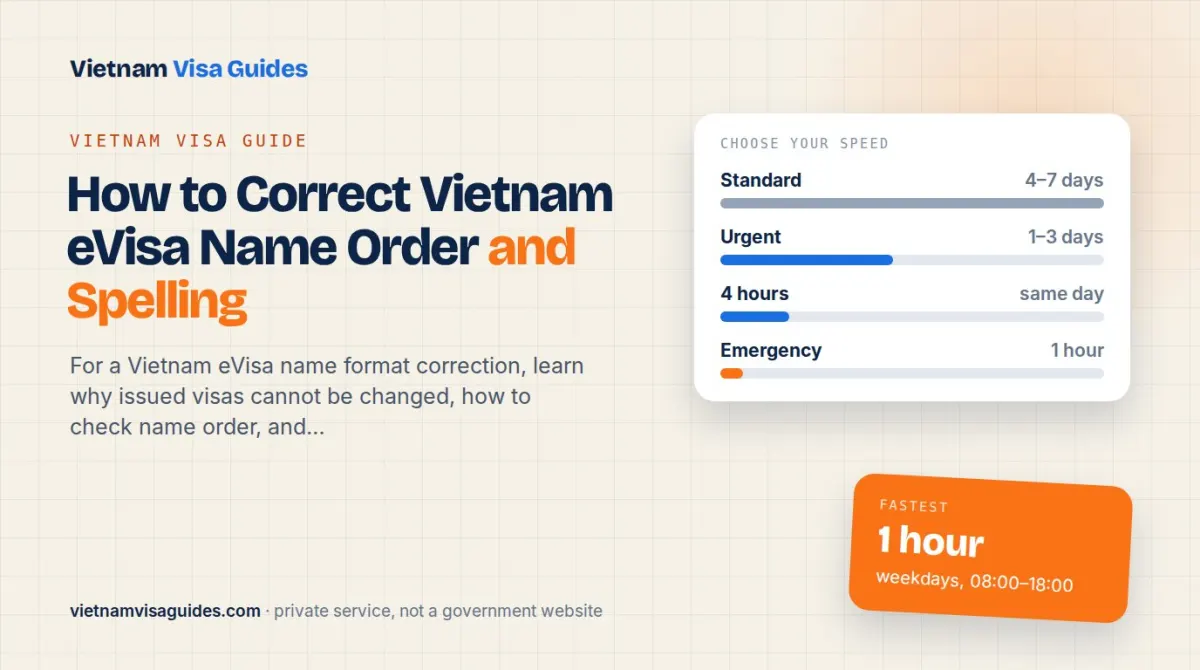
If you’re unsure how to handle a specific mistake, this guide explains how to fix a Vietnam e-visa mistake. When a correction loop leaves little time before departure, you can explore urgent visa assistance as another next step.
3. Common eVisa rejection reasons
A Vietnam eVisa application may be rejected if the portrait, passport image, or submitted details do not meet current requirements. Requirements can depend on your circumstances, so check the latest official guidance before applying. Review these points, especially if you have already had to correct an application.
Start with the portrait. Check the current requirements for the image, including whether they specify when it must have been taken. Choose a clear, suitable image, particularly if your appearance has changed since your passport photo was taken. Review the latest guidance before submitting.
Next, inspect the passport bio-page image. Check the current instructions for what must be visible. Avoid cropping out the lower machine-readable lines, page edges, or printed details if the instructions require them. Check the uploaded file itself, not just the original photo on your device.
Your location may affect which application process is available to you. Verify the current requirements for your circumstances before applying from inside or outside Vietnam. If you are already in Vietnam, check the appropriate next step based on your location and travel status.
Before applying, compare every document with your passport and review the form from start to finish. Check the portrait and bio-page image against current instructions, and verify which application process applies to you. If your application is rejected, read the notice to identify the issue before acting. For example, a missing ICAO line may require a complete passport image, while a location-related issue may require a different response. Addressing the specific cause can help you avoid repeating the same problem in a new application.
4. Processing delays and next steps
Standard Vietnam e-visa processing takes 4–7 working days after payment. If your application remains pending beyond that window, check its status and look for a request or decision before changing your travel plans.
Weekends and Vietnamese public holidays affect the calendar time you wait because processing periods are counted in working days. Peak travel periods can make it harder to plan around a pending decision, so allow time before departure. Don’t treat a processing window as a guaranteed arrival date.
Start with the application status page. Use your registration code, registered email, and date of birth to find the record. Confirm that payment went through, then check for a correction request or missing information. Keep a copy of the status and payment receipt so you can explain the delay clearly if you need assistance.
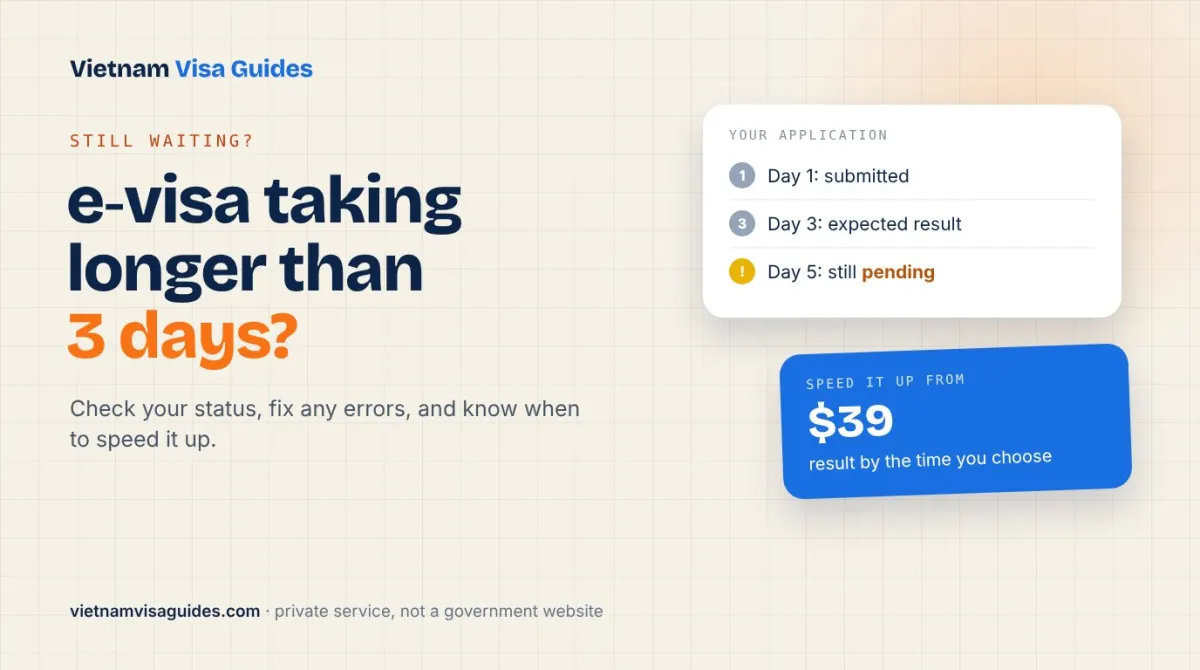
If your e-visa has not arrived before departure, don’t treat a pending application as an approved visa. Check the status again, review any message, and identify whether the issue is payment, a requested correction, or processing time. Then decide whether your travel plans need to change. For an overview of what to check when an e-visa takes longer than 3 days, focus on the next action relevant to your application.
Have your passport details and application record ready if you need assistance. In one message, explain your departure date, application status, and any correction request. This gives the person reviewing your case the key details without requiring you to reconstruct the timeline. Avoid submitting duplicate forms until you know whether the original application or payment was recorded.
If your departure is close, consider an urgent eVisa option while you assess the pending application. The final approval decision remains with Vietnam Immigration, so don’t assume faster processing means approval or make travel plans on that basis.
Vietnam Visa Guides | Urgent Vietnam eVisa Assistance
Vietnam Visa Guides | Urgent Vietnam eVisa Assistance helps travelers address urgent Vietnam visa needs when an application is delayed or travel is near. Its options include Vietnam eVisa Urgent, Urgent & Same-Day Vietnam Visa, and Emergency Vietnam Visa in 1 Hour, on Weekend. These services are separate from the official government e-visa portal, and Vietnamese immigration authorities decide visa approval.
Share your application status, travel date, and any correction request to clarify the next steps. If your eVisa is still pending close to departure or a rejection has disrupted your plans, contact Vietnam Visa Guides | Urgent Vietnam eVisa Assistance to discuss urgent eVisa options.
Take the Next Step With Confidence: Vietnam eVisa Review Bottlenecks
Give your visa issue a clear next step instead of letting uncertainty shape every travel decision. Identify what needs attention now, such as an unresolved application, a correction, or a changed departure plan. Summarizing your situation clearly can help you decide what to do next.
Vietnam Visa Guides | Urgent Vietnam eVisa Assistance provides urgent eVisa services when standard processing no longer fits your timeline. The service can consider your application status and expected travel date when discussing a practical way forward. Vietnam Immigration makes the final approval decision.
Take things one step at a time. You can review your options before deciding what to do next.
Your travel plans can still move forward with a clear, informed next step.
Frequently Asked Questions
How Long Does a Vietnam E-Visa Normally Take?
Processing times can change, so check the latest guidance on the official government e-visa portal before applying. Do not assume that your application will be processed within 3 working days. If your trip falls near a weekend or public holiday, allow for possible delays. Keep some flexibility in your travel arrangements until your visa has been issued.
Vietnam eVisa Problems: Rejected, Payment Failed or No Response?
Identify the problem before taking another step. A bank payment confirmation may not mean the application portal recorded the payment, while a rejection is a decision, not a pending status. Save any confirmation or error message. If the result is unclear, don’t treat the application as approved or pay again before checking the record.
What causes delays or bottlenecks in Vietnam e-visa applications?
A delay means the application is still awaiting a decision; a rejection means a decision has been made. The distinction matters because the next step differs. Review the status message for a request or outcome, then address the issue it identifies. A pending application alone does not show that there is a problem with your eligibility.
Which details commonly cause Vietnam e-visa applications to be rejected or returned?
Pay close attention to the passport’s ICAO lines, which contain machine-readable name and document details. A surname entered differently from the line, or special characters in a name, can create a mismatch. Compare the form with the passport’s printed information, including the order of names, rather than relying on how your name appears on tickets or other documents.
How can applicants check Vietnam e-visa status and correct application errors?
Use the application’s status-check function and follow the instruction attached to the current result. If the information is wrong, check the latest official guidance for instructions on correcting or resubmitting the application. Don’t submit a second application until you understand the first application’s status, especially if its payment record is unclear.
How do Vietnam e-visa processing times compare with visa-on-arrival or embassy visa options?
Vietnam e-visa processing times can change, so check the latest official guidance rather than relying on a 3-working-day estimate. Visa-on-arrival and embassy options follow different application steps, so compare the route with your travel deadline.

Article by
Andrew - Vietnam Visa Guides
I'm Andrew (Hoàng Tùng Dương, "Duong" to many of my clients), a visa consultant at Joey Visa Vietnam since 2017.
I help travellers from all over the world get their Vietnam e-visa quickly and without mistakes, including urgent visas in as little as 1 hour and on weekends.
Together with the Joey Visa team, we've helped more than 155,000 travellers since 2017.
Explore Topics

Written by
Andrew Duong
Vietnam visa consultant at Joey Visa Vietnam since 2017. I check every application by hand, including urgent and weekend e-visa cases.