Vietnam Visa Concierge Service or Self-Service eVisa Application
Written by Andrew Duong, visa consultant at Joey Visa Vietnam · Last updated:
vietnam visa concierge service vs self service evisa application: compare eligibility, processing time, validity, and urgent visa help options for you.
The choice between a Vietnam visa concierge service and a self-service eVisa application comes down to how much help you need. You can apply for an eVisa yourself or use an agency, and results are generally issued after 4–7 working days. Applicants are advised to apply 1–2 weeks before travel, so a standard application may not suit a last-minute departure.
It’s reasonable to want a clear answer before submitting an application, especially when your flight is approaching. This guide explains how a Vietnam visa concierge service compares with a self-service eVisa application, what an eVisa is, who can apply, and how processing time and validity work. You’ll also learn what personal assistance can help with, when applying yourself may be enough, and which details to check against your passport, travel dates, and entry point.
Key Takeaways
- Learn how eVisa approval differs from visa on arrival, including the extra arrival steps that can affect your plans.
- Identify how your passport, travel purpose, and intended checkpoint shape your visa options.
- See which application details to prepare carefully to reduce avoidable errors and travel complications.
- Understand when applying yourself may be enough and when urgent visa assistance could help with a tight departure timeline.
E-visa and visa-on-arrival entry procedures
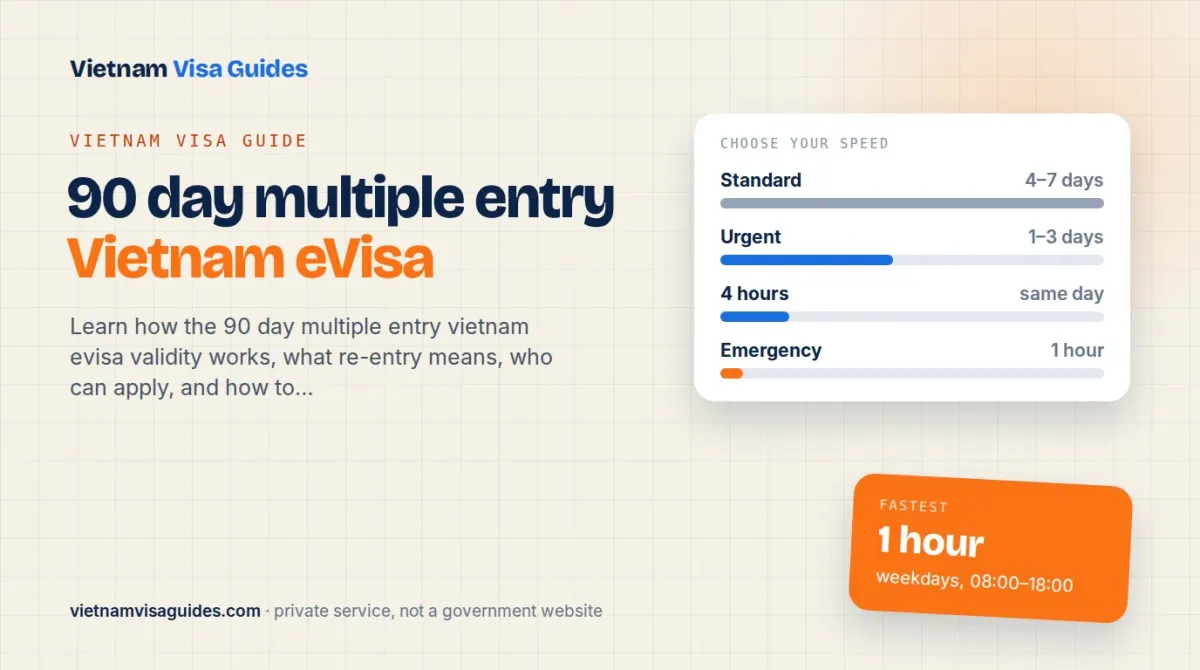
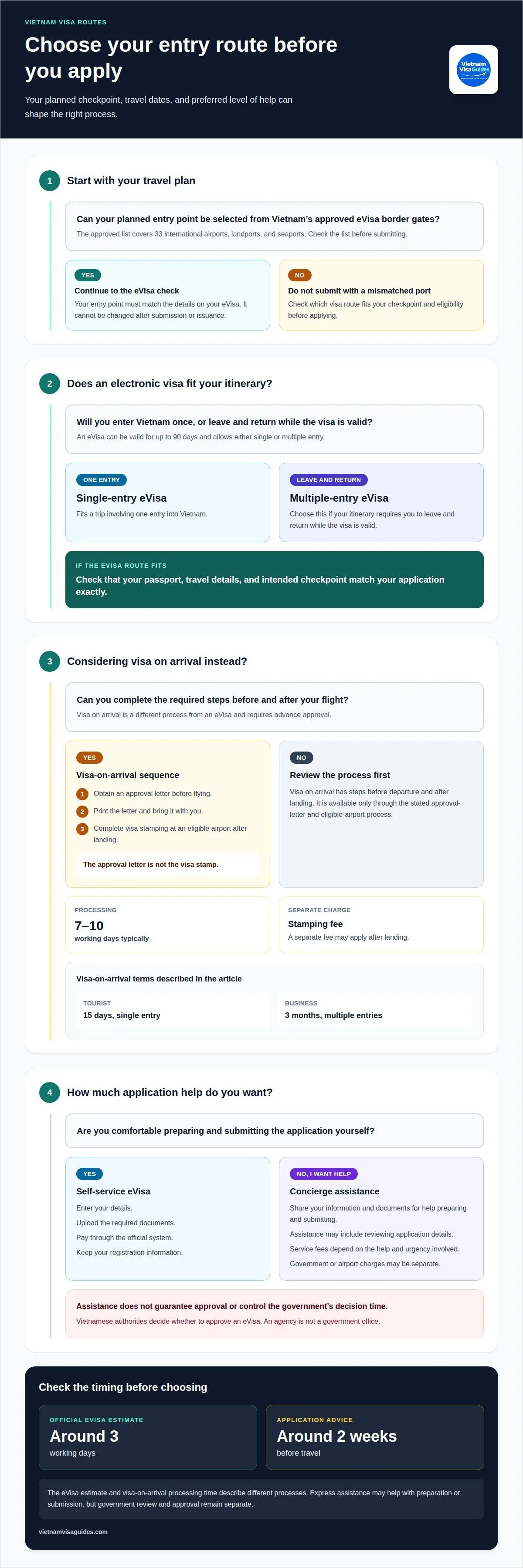
A Vietnam eVisa can be valid for up to 90 days and allow single or multiple entry. It is an electronic visa, while visa on arrival requires advance approval and a visa stamp after landing. Your choice affects the steps before departure and at arrival.
EVisa holders can use approved entry and exit points across 33 international airports, landports, and seaports. The Vietnam Immigration Department publishes the approved border-gate list. Select your intended checkpoint carefully: the entry port cannot be changed after submission or issuance. Check that your intended entry point matches the details on your eVisa before traveling.
Check that your intended entry point is listed before submitting your application. Then make sure the visa details match your passport and travel plans exactly. A single-entry eVisa is for a trip involving one entry into Vietnam. Choose multiple entry if your itinerary requires you to leave and return while the visa is valid.
Visa on arrival follows a different sequence. You must obtain an approval letter before flying, print it, and complete visa stamping at an eligible airport after landing. The letter is not the visa stamp. Processing takes about 7 working days. Tourist visa on arrival is described as valid for 15 days with single entry; business visa on arrival is described as valid for 3 months with multiple entries. A separate stamping fee may apply.
Concierge agencies can help prepare an application, review details, and support expedited processing. Their service fees depend on the assistance and urgency involved; government or airport charges may be separate.
To identify the official eVisa website, look for the portal operated by Vietnam’s Immigration Department. A private agency is not a government office, even if it assists with an application. Compare how the two routes work in this official eVisa and assisted service comparison, and distinguish application support from government approval.
Eligibility by passport, purpose, and arrival checkpoint
Your passport nationality, travel purpose, location, and intended checkpoint determine which Vietnam visa route fits. Foreigners outside Vietnam with a valid passport may apply for an eVisa personally or through a requesting agency. Some travelers may qualify for visa-free entry, while others may need an eVisa. Choosing between a Vietnam visa concierge service and applying for an eVisa yourself affects who helps prepare the paperwork, not the eligibility rules.
Visa-free stays vary by nationality and conditions. Brunei ordinary passport holders may stay visa-free for 14 days, while Philippines ordinary passport holders may stay for 21 days. Japanese and Korean passport holders may enter visa-free for up to 45 days for tourism or business during the stated policy period, with at least 6 months of passport validity. Chilean and Panamanian ordinary passport holders may stay up to 90 days if their visit involves no income-generating activity. Taiwanese, Hong Kong, and Chinese passport holders require a visa.
For an eVisa, the passport and travel details must fit the intended visit. Vietnam’s Immigration Department publishes approved eVisa border gates. The arrival checkpoint matters because it must match your entry plan. Some foreigners covered by Clauses 1, 2, 3 and 4, Article 8 of Vietnam’s Law on foreigners’ entry into, exit from, transit through and residence in Vietnam must apply through inviting or guaranteeing agencies and organizations, rather than the eVisa website.
Your travel purpose and eligibility determine whether the eVisa route fits your trip. Visa on arrival is a separate option and is not part of the assisted eVisa service. Choosing between personal assistance and applying yourself affects how you manage the application, not the immigration rules. Processing times and eligibility requirements are separate considerations.
Use your passport nationality, visit purpose, and planned checkpoint to identify the route that fits your trip.
Official eVisa processing time and validity
Vietnam eVisa results are generally issued after 4–7 working days, and an eVisa can be valid for up to 90 days. Your departure date and chosen application route help determine how much time you have for each step.
How should you plan around processing times?
Applicants are advised to apply 1–2 weeks before entry. This allows time for processing and for addressing application issues. Keep your registration code to follow the application status, and prepare your documents before submitting. The choice between a Vietnam visa concierge service and self-service eVisa application affects who helps with preparation, but not the official processing estimate.
How do standard and express processing compare?
Standard processing takes 4–7 working days, excluding weekends and public holidays. Standard processing is not time-guaranteed. Express assistance may support preparation or submission, but its handling timeline is separate from the government’s review and decision.
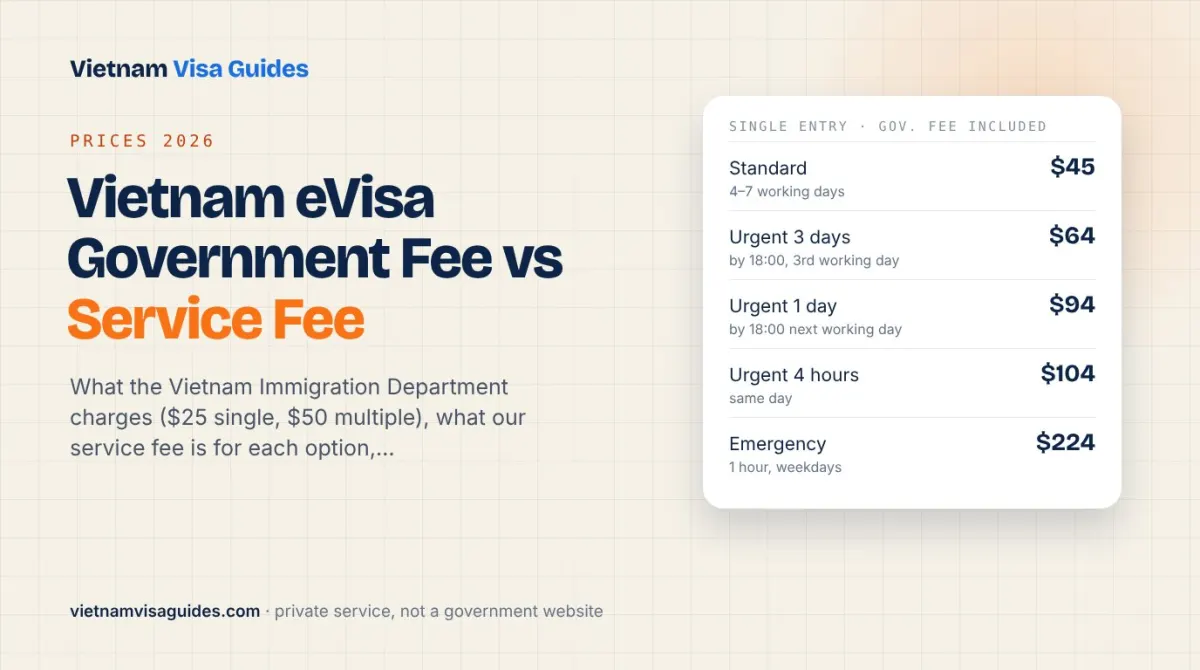
The official eVisa fee and an agency’s assistance fee are separate charges. Agency charges depend on the case and are provided after a quote request, with urgency and the assistance required shaping the cost.
A concierge service cannot guarantee approval or control the government’s decision time. Vietnamese authorities decide whether to approve an eVisa. Assistance can help with preparing and submitting the application, but it does not replace immigration review.
How do self-service and assisted applications differ?
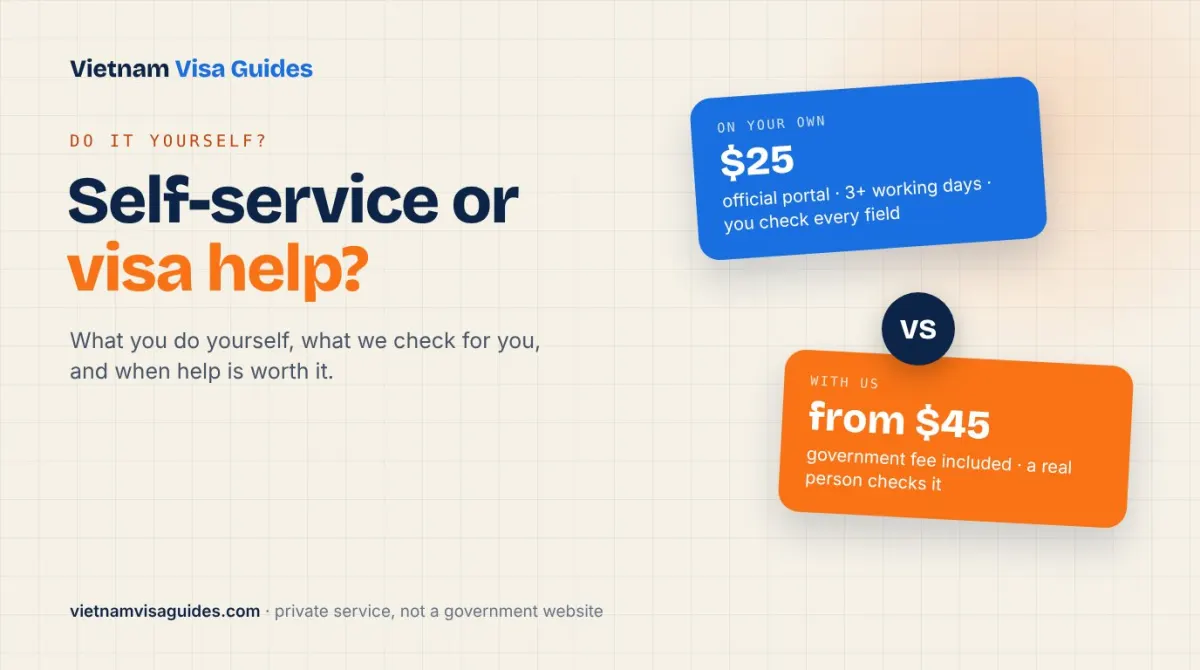
With self-service, you enter your details, upload the required documents, pay through the official system, and keep your registration information. With concierge assistance, you provide your information and documents for help preparing and submitting the application. This can be useful when your departure is close or you want help checking application details. If you have enough time and prefer managing each step yourself, self-service may suit you.

Vietnam eVisa application and electronic approval
A self-service application is submitted through Vietnam’s official electronic system. Using Vietnam Visa Guides adds application assistance, not government authority. You provide your details and documents, then keep the registration information to track your application. Submission is not approval: Vietnamese immigration authorities make the final decision.
Prepare these items before starting:
- A valid passport with at least six months of validity remaining.
- An image of the passport data page and a selfie portrait photo (no printed photo is needed).
- A portrait photograph taken within the previous six months and under 2 MB.
- Required application details, including contact information.
Each application covers one foreigner, so each traveler needs a separate submission. Enter the passport details carefully and match the intended travel information. Vietnam Immigration Department states the official e-Visa fee is US$25 for a single-entry application and US$50 for a multiple-entry application. The application fee is paid through the electronic payment gateway and is not refunded if the application is refused.
After submitting, save your registration information and use it to track the application status. When the eVisa is issued, check that its details match your passport and trip, including the listed entry point. Print the approved eVisa and carry it when you travel. A payment confirmation or registration code is not an approved visa and does not authorize boarding or entry into Vietnam.
Airport Fast-track assistance can help with arrival procedures, but it does not replace a required visa. Keep the distinction clear: the official system handles government applications, while Vietnam Visa Guides provides private application assistance. If you have time and are comfortable managing each step, self-service gives you direct control. If you need help preparing or submitting an application, assistance is available, but approval remains the authorities’ decision.
Vietnam Visa Guides | Urgent Vietnam eVisa Assistance
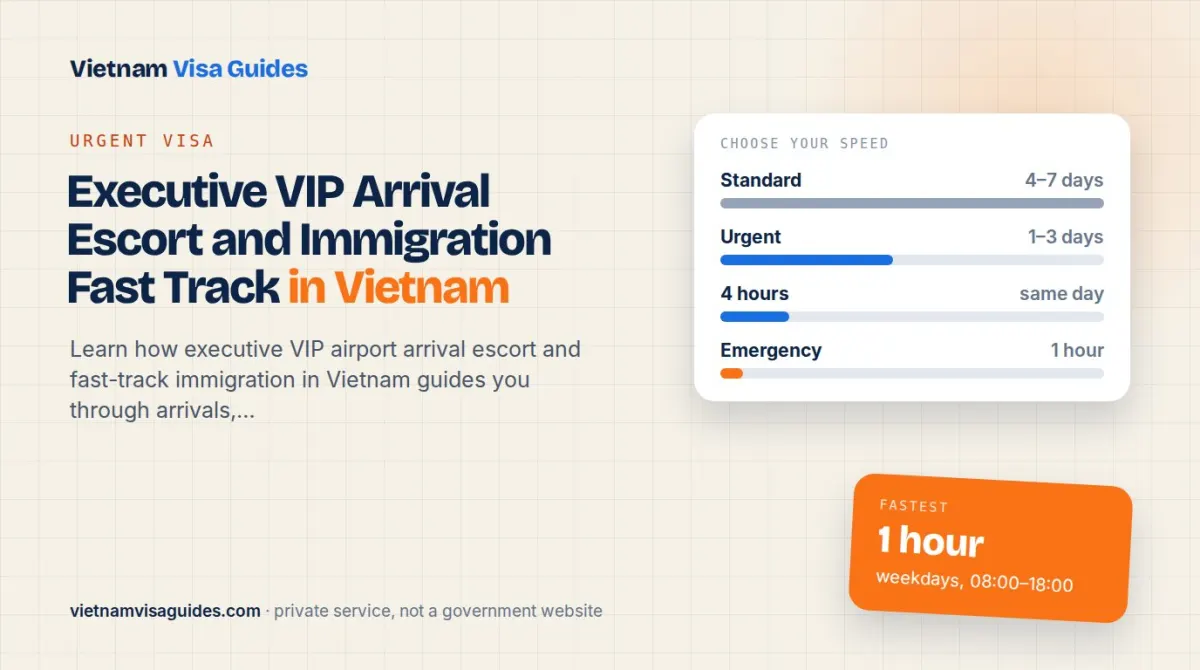
Vietnam Visa Guides | Urgent Vietnam eVisa Assistance can help when you need support preparing an eVisa application or face a close departure. Its Vietnam eVisa Urgent and Urgent & Same-Day Vietnam Visa services offer assistance for time-sensitive applications. Emergency Vietnam Visa in 1 Hour, on Weekend is another option for urgent cases. Vietnamese immigration authorities still decide whether to approve a visa.
Choose self-service if you have time to complete the application and manage its details yourself. Consider Vietnam Visa Guides if you need application support or your travel schedule is tight. Contact Vietnam Visa Guides | Urgent Vietnam eVisa Assistance to discuss the standard or urgent processing option that fits your situation.
Choose the Next Step That Fits Your Travel Plans
The choice between a Vietnam visa concierge service and a self-service eVisa application should reflect how you want to manage the process. Match your application plan to your travel arrangements, and check that the details are consistent before submitting. This makes it easier to spot errors in dates, passport information, or your intended entry point.
Keep your passport and travel information together so you can enter the same details accurately throughout the application. If someone else is travelling with you, coordinate plans early, but prepare a separate application for each traveller. Keeping each person’s information distinct helps avoid mix-ups.
If you need personal help with an urgent application, contact Vietnam Visa Guides | Urgent Vietnam eVisa Assistance to discuss the available processing options. Standard processing is not time-guaranteed, but eligible Urgent and Emergency options come with a Time Guarantee: if we miss the delivery time for a complete, correct application, we refund our service fee. Vietnamese authorities still decide whether to approve the visa. Choose the application route that suits your schedule and comfort with the process.
You can take the next step with a clearer plan and steady support.
Frequently Asked Questions
How long does it take?
Allow time for more than filling in the application. Account for the processing option, the possibility of correcting details, and the time needed to receive and review the decision. Set your personal deadline before your flight date, not on it, so you have time to respond if the application needs attention. Urgent processing has specific target times and cut-offs in Vietnam time.
Is the eVisa always faster?
No. The right choice depends on your circumstances, so compare the full process rather than assuming one route is quicker for everyone. Your eligibility, travel dates, and intended entry point affect what you need to do. Also consider the steps after approval, such as checking that the eVisa matches your passport and printing it for travel.
How much does a Vietnam e-visa cost, and what are the official processing times?
The official fee depends on whether you select single or multiple entry, and the government processing estimate is separate from any agency assistance charge. Before paying, confirm the entry type matches your itinerary and review the amount shown for that selection. Keep your payment record with your application details, so you can refer to both if a transaction or submission needs follow-up.
How do you apply for a Vietnam e-visa yourself, step by step?
For self-service, use Vietnam’s official eVisa application system and complete the personal, passport, and travel sections carefully. Review the full form before submitting, then store your registration information with your travel documents. If you are applying for companions, keep each person’s application records separate. If you prefer assistance, Vietnam Visa Guides can help prepare and submit the eVisa application.
What mistakes commonly cause Vietnam e-visa delays or rejections?
Rushing can lead to inconsistent details, an unsuitable photo, or an entry selection that does not fit your trip. Review the application carefully before submitting, then compare its details with your passport and travel plans. If you are unsure about a submitted application, use its existing registration information to follow up rather than starting another application.

Article by
Andrew - Vietnam Visa Guides
I'm Andrew (Hoàng Tùng Dương, "Duong" to many of my clients), a visa consultant at Joey Visa Vietnam since 2017.
I help travellers from all over the world get their Vietnam e-visa quickly and without mistakes, including urgent visas in as little as 1 hour and on weekends.
Together with the Joey Visa team, we've helped more than 155,000 travellers since 2017.
Explore Topics

Written by
Andrew Duong
Vietnam visa consultant at Joey Visa Vietnam since 2017. I check every application by hand, including urgent and weekend e-visa cases.